Subpanel grounding: do you call out a missing ground?
A condo panel downstream of a meter-main disconnect, with no ground wire and a bonded neutral, is worth a callout. How to word it and when to refer.

Series: Field Notes
- 01Subpanel grounding: do you call out a missing ground?
- 02Cast iron drain corrosion: when do you refer it out?
- 03Missing roof shingles: repair or replace?
- 04Crimped flex duct on the roof deck: do you call it out?
- 05Bowed stud in a bearing wall: warped or structural?
"Every unit in this building is wired that way." That was the senior inspector's answer. The newer inspector on the job, who asked about it on r/HomeInspections, suspected it still wasn't right. The newer inspector was right.
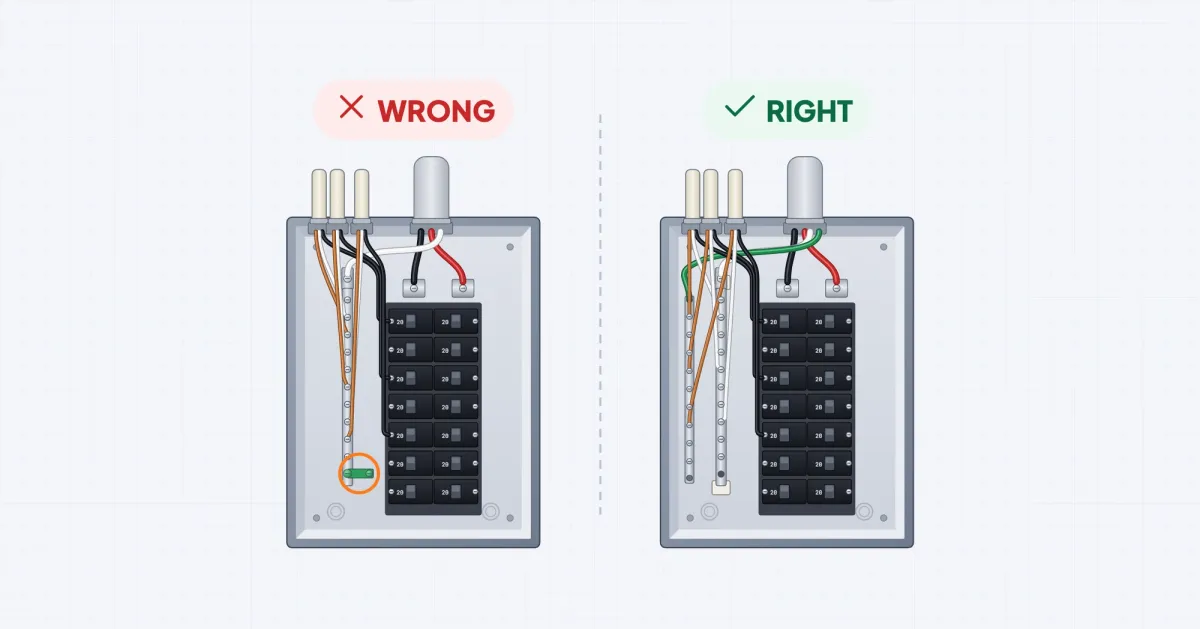
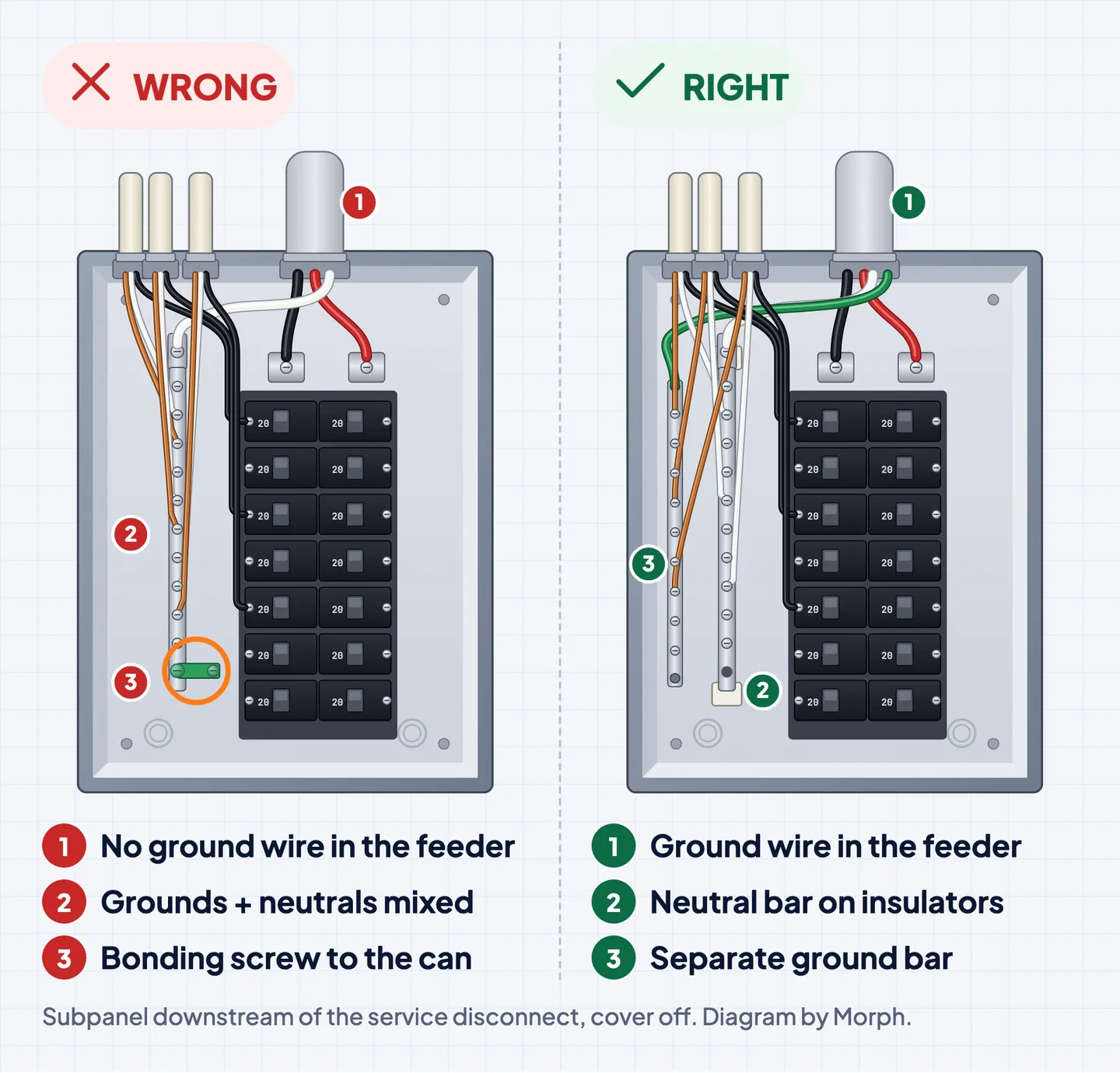
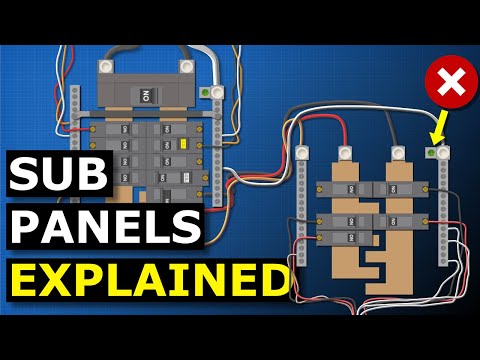
Wrong vs. right, side by side
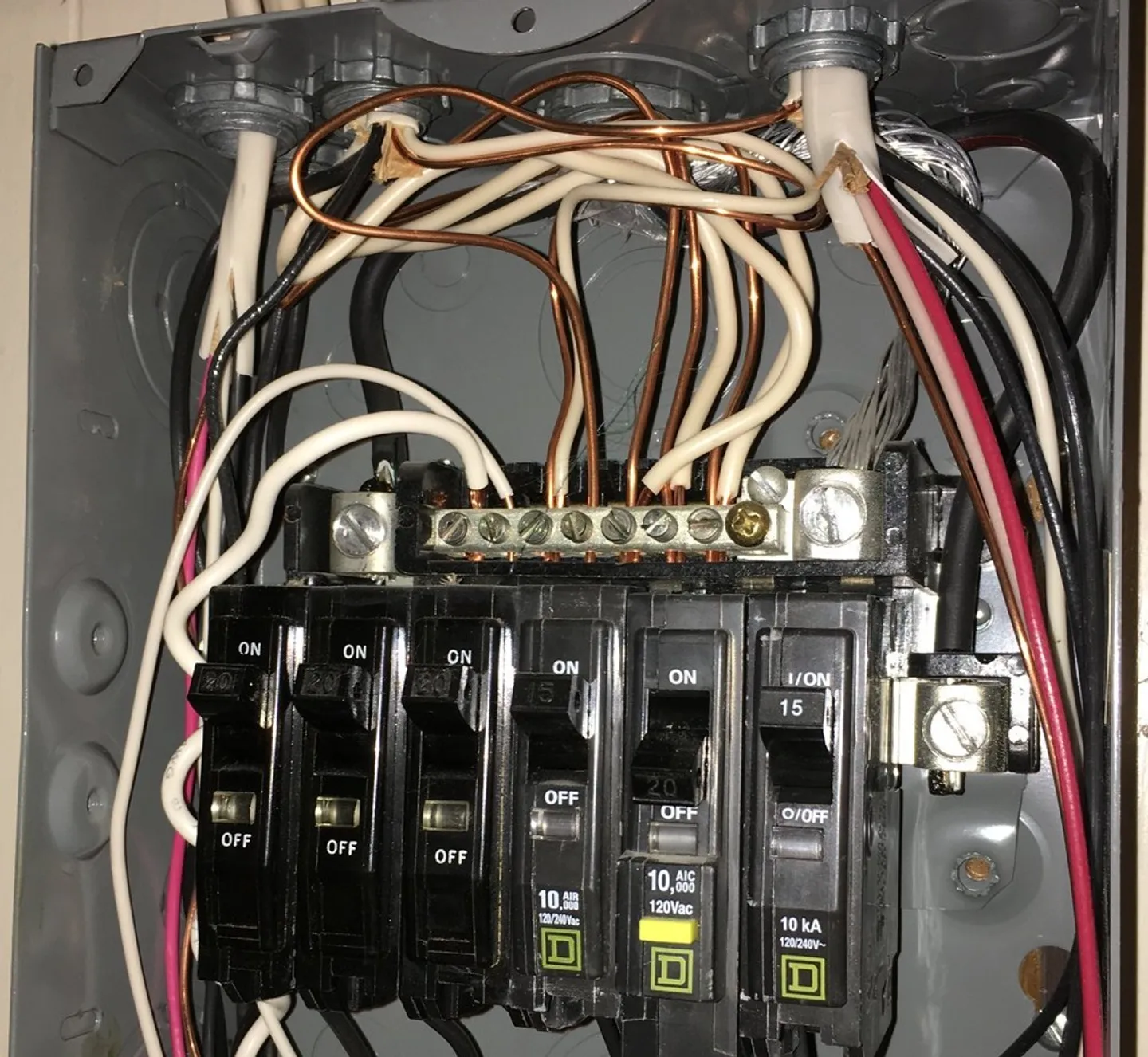
Here is what the left side looks like in a real panel. Bare grounds and white neutrals share one bar. The owner who posted this photo later rewired it.
Check these 3 things on site
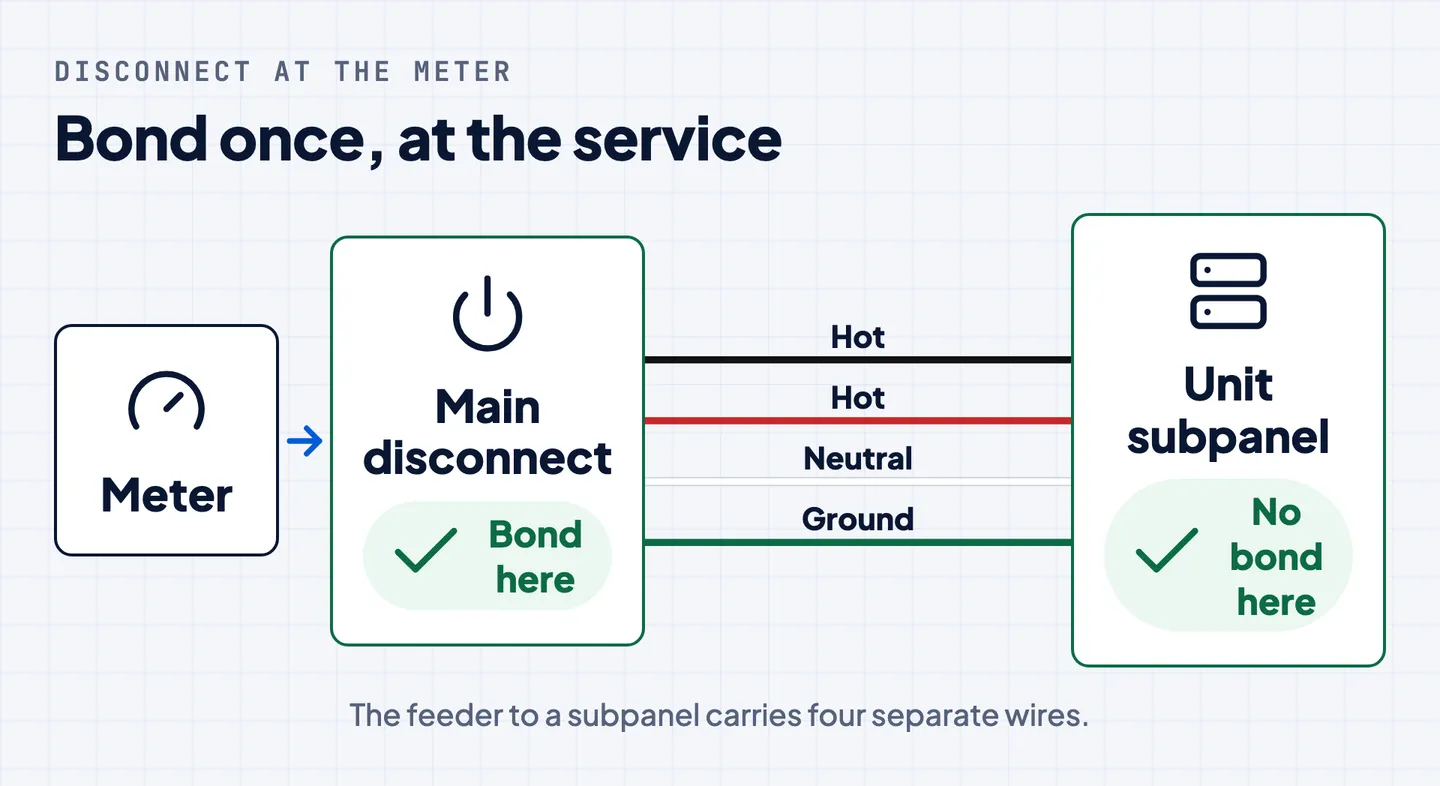
- Where is the service disconnect? If the main shutoff is at the meter, the unit panel is downstream of it.
- Does a ground come in with the feeder? Look for a green or bare conductor, or metal conduit that might be serving as the path.
- Is the neutral bar bonded to the can? Look for the green screw or the strap.
Why it goes in the report
With the neutral bonded at both ends, normal return current can split between the neutral and any metal bonded to the enclosure. If that neutral connection ever loosens, the metal it was grounding loses its path. A building-wide habit tells you how the units were wired. It doesn't tell you whether this panel is right for where it sits.
Copy-ready report comment
Feeder in metal conduit? Add one sentence: "The feeder enters through metal conduit. Whether the conduit serves as an acceptable ground path was not determined."
Leave out "acceptable for this building," "unsafe," "fire hazard" and "code violation." The first excuses the condition. The rest claim more than a visual inspection can confirm.
How this goes in Morph

Snap the open panel and say what you see: "Unit panel, main disconnect at the meter, neutral bonded to the can, no ground wire with the feeder." Morph turns the photo and the voice note into a draft comment in your own words, built from your own templates and past writing. You edit it, make the call and sign. Your photos, notes and wording stay yours: Morph never uses them to train its AI or for anyone else. It works with no signal; the AI drafting runs when you're back online.
Watch: three explanations


What can change the call (disconnect location, metal conduit, age, your SOP)More detail
Where the disconnect really is. The finding rests on the breaker at the meter being the unit's service disconnect. If there is no disconnect at the meter and the unit panel is the first way to shut off power, that panel may be the service equipment, and the bond belongs there. If you can't trace which one it is, say so in the comment.
Metal conduit. No ground wire in the panel doesn't always mean no ground path. If the feeder enters through metal conduit, the conduit may be the path. Whether it is continuous and acceptable can't be confirmed by looking, so note the wiring method and let the electrician decide. The bonded neutral is still a separate observation.
Age and permit history. Rules for feeders and downstream panels have changed across code cycles, and you usually can't confirm which edition applied or whether a permit was finaled. That's why the comment describes conditions and cites no code section. Whether an older installation stands is for the electrician and the local authority having jurisdiction (AHJ).
Your standard of practice. Your state's SOP sets what you must report in the electrical section. It decides the scope of the report. The building's habits don't.
Condo feeders, photos to take, and the limits of this callMore detail
Condo feeders. The feeder from the meter to the unit may run through common areas, and who maintains it can depend on the association's documents. A line such as "The client may wish to ask the association who is responsible for the feeder between the meter and the unit" points the client the right way without stating who owns what.
Separate findings. Heat discoloration, melted insulation or signs of arcing in the same panel are their own finding with their own urgency. Write them up on their own lines.
Photos to take. The open panel with the dead front off, showing the neutral bar and the bonding strap or screw. The spot where the feeder enters. The meter location and the disconnect there, with any labels showing which unit it serves. The panel label if it is readable.
Limits. A visual inspection can't confirm that conduit is continuous, test the feeder or determine permit history. The comment describes conditions and recommends evaluation. It isn't engineering advice for a specific property. The licensed professional who signs the report owns the call.
More videos and reading
- Sub panel neutrals and grounds are together on one bus bar (A Pelletier, CMI, 2:08): a real inspection find.
- Separate Neutral and Ground (Home Inspection Bytes, 6:04): aimed at inspectors.
- Electric Sub Panel Done Right (Inspection Pros, 1:17): a correct panel on camera.
- Sub Panel Safety Upgrade: Isolate Neutral, Bond Ground (Colin Does Electric, 4:08): a before-and-after rework.
- Grounding and Bonding Service Equipment, NEC 250.24 (MikeHoltNEC, 0:56): the one-minute rule.
- Inspecting the Main Panelboard (InterNACHI): what a subpanel needs, from the inspection side.
- Grounding and Bonding: What Home Inspectors Need to Know (ASHI Reporter).
- Subpanels: when the grounds and neutrals should be separated (Structure Tech), with photos.
I build report software for home inspectors. In Morph, the AI drafts and the inspector reviews and signs the report, and if it is not a good fit, that is fine too.
Ready to streamline your inspections?
Morph uses AI to help inspectors work faster and deliver better reports.